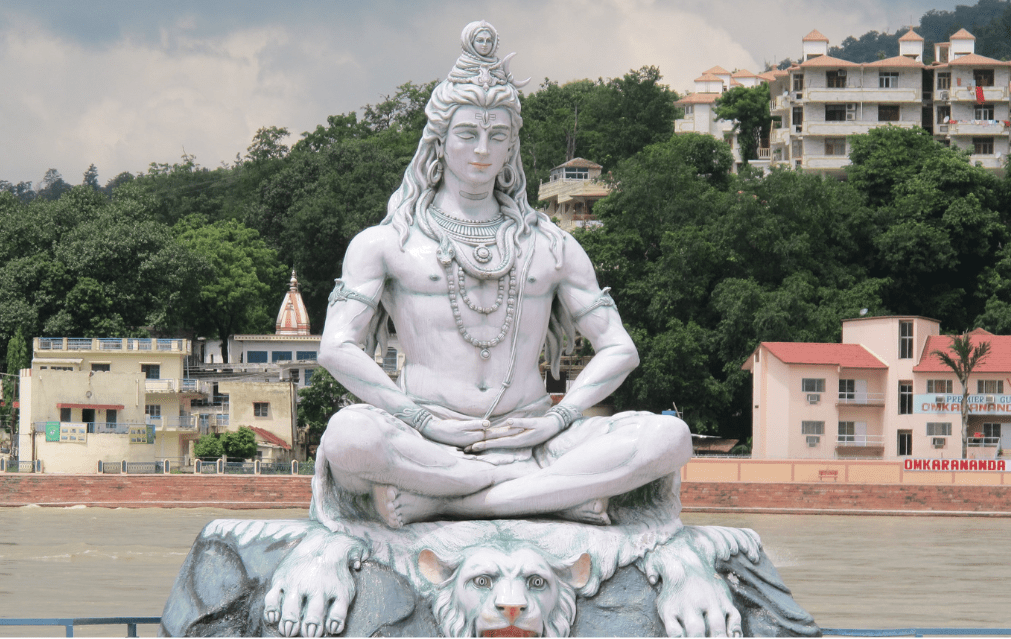
Mahashivratri is a festival celebrated to honour God Shiva, one member of the Trimurti or the three main Gods in the Hindu tradition.
Who is Shiva?
In essence, Shiva is the unmanifest, an entity that goes beyond the physical realm and into the realms of pure consciousness, of existence and non-existence. He is the creator of our consciousness and the destroyer of our ignorance and illusions. He is Adiyogi or the first yogi who taught the Saptarishis (seven celestial saints) the art of Yoga which they later passed on to mankind.
Shiva is everything and nothing. He exists, but does not. To get to him, one has to fiercely face their shadows, inner demons and accept self love through the form of acceptance of the God within, the seat of pure consciousness.
Shiva is Bholenath, the innocent one, but also Bhairava, the fierce one. He embodies non-duality to show us that we can reach him by reaching the depths within ourselves. To know and embody the essence of Shiva, is to know and understand the magic and beauty of the cosmos itself.
When & why do we celebrate Mahashivaratri?
Mahashivaratri is celebrated every year on the 13th night of the waning moon and 14th day of the month Phalguna based on the Hindu calendar to honour the embodiment of pure consciousness, God Shiva. This date usually occurs in either February or March according to the Gregorian calendar.
Based on the various Puranas, there are a number of stories associated with the celebration of Mahashivaratri. One such tale recounts that on this day, Shiva danced his celestial dance, the mighty tandav, and the entire existence came into being.
Another account denotes that this festival is observed to celebrate the marriage of Shiva and Parvati, the embodiment of Shakti and daughter of the mountain king Himavan and Menavati of the Himalayan region.
In accordance with this tale, it is also said that on this day, a major portal opens in the cosmic galaxy to unite the masculine and feminine aspects that exists within all of us regardless of the male or female gender. Thus, the cosmic marriage of Shiva and Shakti, the divine masculine and divine feminine also represents this inner union.
What to do on Mahashivaratri?
According to experts, Mahashivaratri is one of the best days of the year to meditate on Shiva or just meditate in general as cosmic energies are at their peak for personal and spiritual development. It is also a good day to observe our inner selves and delve deeper into the true nature of our being to manifest that reality in the physical realm.
On this holy day, many devotees across India and the world worship Shiva by offering him sweets and flowers, especially the three-faced Bilva leaves which is very dear to the god. Water and milk are also offered to the supreme God’s lingam form to please him and many devotees chant Om Namah Shivay, his holy mantra to invite Shiva into their being to purify them from the inside out.
This article is the copyright work of the author and this blog.

 The Topical Mill
Leave a comment